Home care during a gout flare
Prepared 2026-10-29 · Read as Markdown
Small adjustments can make a painful joint easier to live with while appropriate treatment takes effect. Home care supports comfort; it cannot confirm the diagnosis or clear the underlying deposits. A first or unusual episode still needs assessment. [S03] [S08]
Rest without forcing the joint
Reduce pressure on the affected area. Raise the limb if that feels comfortable. Loose footwear and keeping bedclothes off a tender joint may help. Avoid pushing through painful activity during the flare. S08
Use cold packs carefully
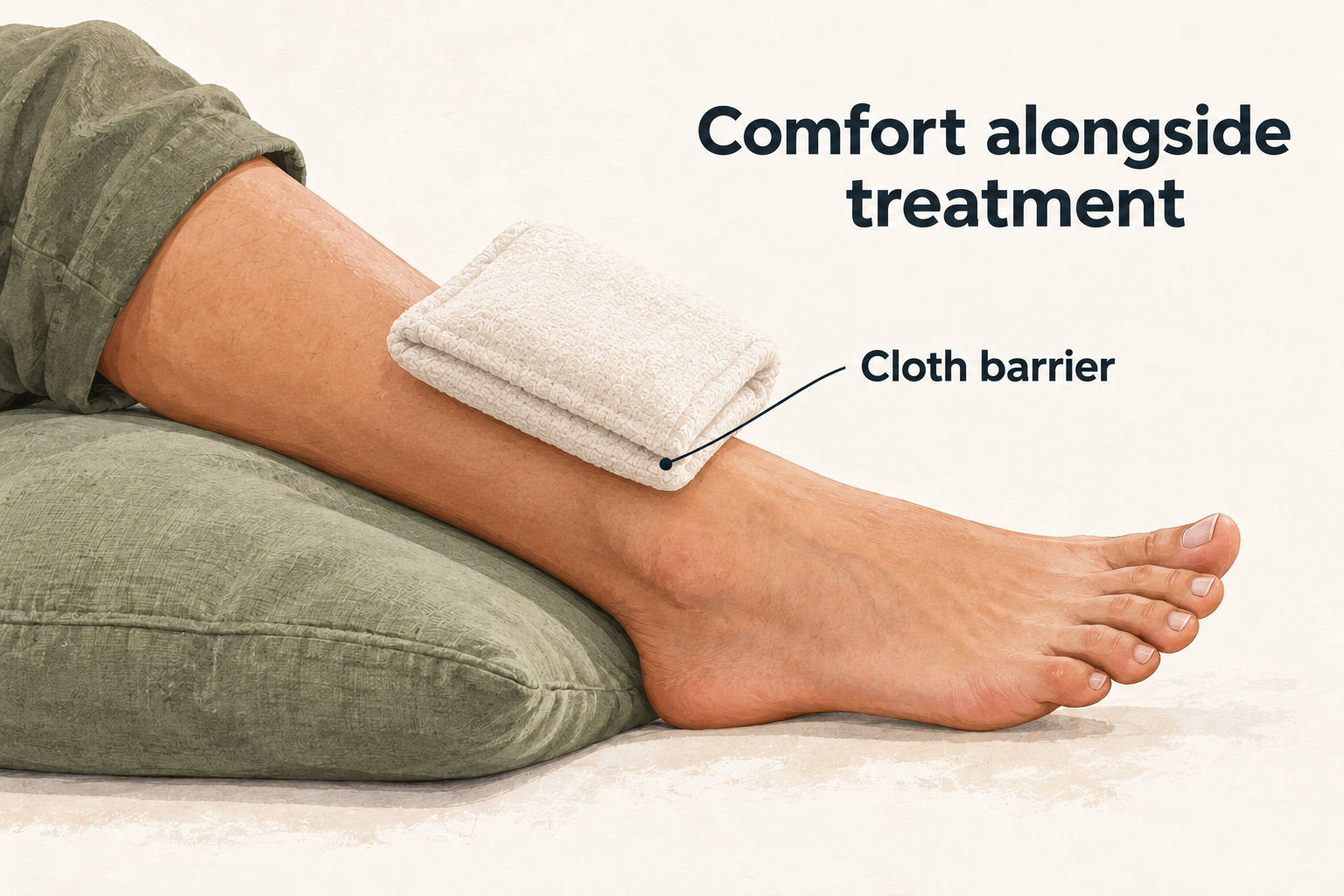
A cold pack can be used alongside prescribed treatment. NHS guidance suggests a wrapped ice pack or bag of frozen peas for up to 20 minutes at a time. Put cloth between the pack and your skin, remove it for discomfort or skin changes, and do not fall asleep with it in place. Take particular care if sensation or circulation is impaired. S03 S08
Keep fluids and meals manageable
Avoid dehydration, but keep to any fluid restriction for heart or kidney disease. There is no universal water volume that flushes crystals out of a joint. Avoid alcohol, fasting, crash diets, and juice cleanses during a flare; aim for regular meals you can tolerate. S02 S08
Check before adding medicine
Follow your individual flare plan, or ask a clinician or pharmacist about suitability. Over-the-counter anti-inflammatory medicines still have interactions and risks. Supplements, herbal tinctures, and homeopathic products should not delay assessment or treatment. S03 S17 S20
Get help when symptoms change
Worsening symptoms, fever, or feeling unwell need urgent attention. Contact your care team if the prescribed treatment is not helping or side effects occur. Do not use a home-care waiting period to override concerning symptoms. After recovery, review the longer-term plan. S03 S08
Related pages
- When joint symptoms need urgent help
- Managing a gout flare
- NSAIDs for gout flares
- Natural remedies, complementary approaches and homeopathy