Managing a gout flare
Prepared 2026-10-29 · Read as Markdown
If you have diagnosed gout and this feels like your usual flare, follow the treatment plan your clinician prescribed. If this is your first episode, the symptoms are different, or you feel unwell, arrange assessment rather than assuming it is gout. Infection can occur alongside gout. [S03] [S05] [S08]
In this section
Treat inflammation with the plan made for you
Colchicine, an NSAID, or a corticosteroid are common first-line options. The choice depends on kidney function, other medicines, stomach and cardiovascular risks, and your preferences. Use the prescribed directions. Do not combine anti-inflammatory medicines or repeat colchicine courses without clear instructions. S02 S03 S10
Reduce pressure on the joint
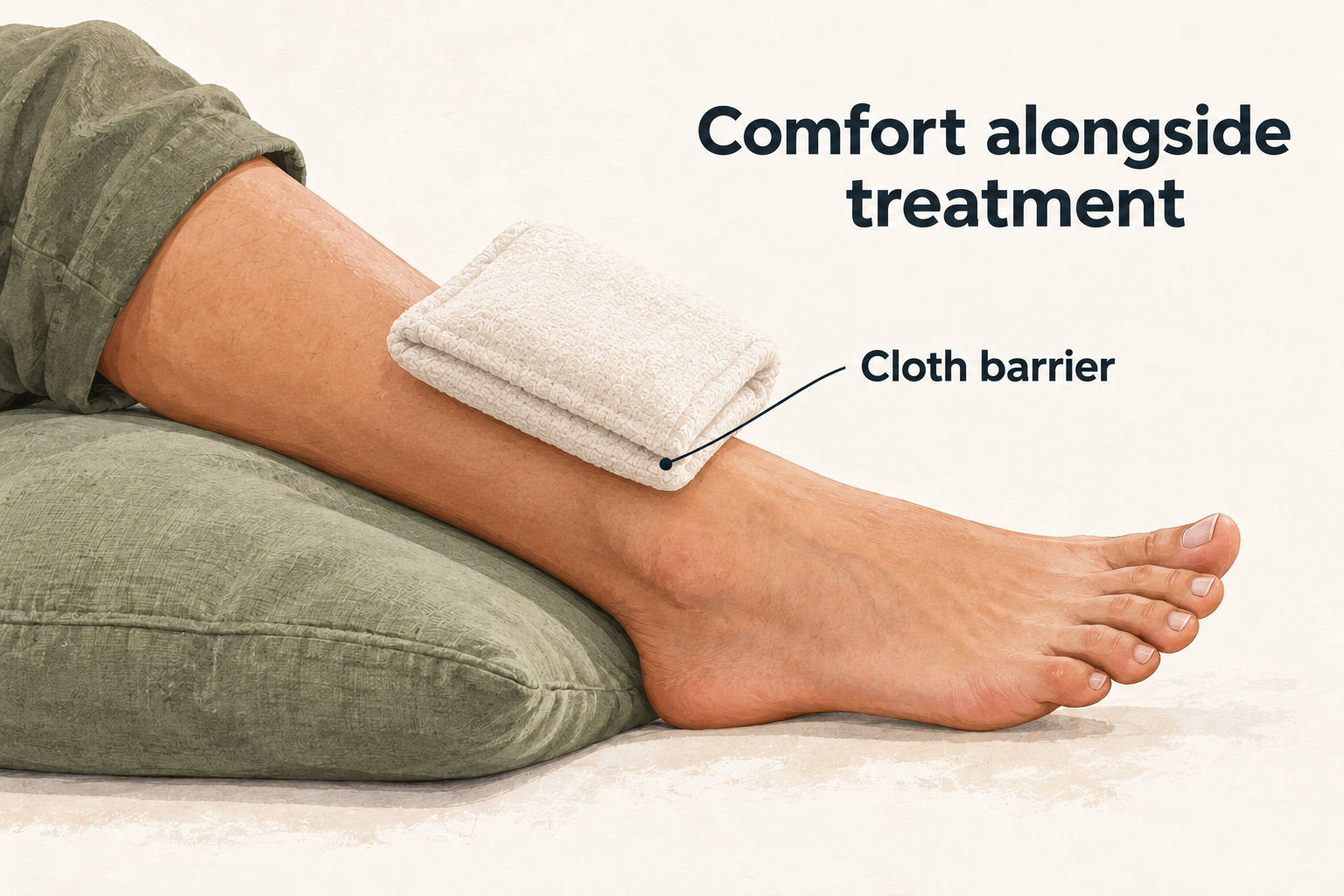
Rest and protect the area. A wrapped cold pack may help; raising the limb can be comfortable. Keep blankets or tight footwear from pressing on a very tender joint. Avoid dehydration while respecting any fluid restriction. These measures support comfort alongside treatment. S03 S08
Keep long-term treatment and flare relief separate
An ordinary flare is usually not a reason to stop existing allopurinol. Flares can occur when urate-lowering treatment is started or adjusted. A new rash or suspected drug reaction is different: stop allopurinol and seek prompt medical advice. Severe skin symptoms, swelling, breathing difficulty, or severe illness need emergency care. S02 S09
Know when the plan needs review
Seek urgent help for fever, feeling unwell, or rapidly worsening symptoms. Infection can also occur without fever. Contact your care team if treatment is not helping or causes side effects; do not keep increasing doses yourself. S03 S08
After the flare, review the diagnosis, urate results, treatment response, other conditions, and whether preventive treatment is appropriate. Getting through the pain matters. So does reducing the chance of facing it again. S03
Related pages
- When joint symptoms need urgent help
- Home care and pain support
- Preparing a personal flare plan
- Colchicine
- Urate-lowering therapy and prevention
Sources
- S02: 2020 American College of Rheumatology Guideline for the Management of Gout
- S03: NICE NG219: Gout, diagnosis and management, recommendations
- S05: 2023 EULAR recommendations on imaging in crystal-induced arthropathies
- S08: NHS: Gout
- S09: DailyMed: Allopurinol tablets prescribing information
- S10: DailyMed: Colchicine tablets prescribing information