Make a personal flare plan before you need it
Prepared 2026-10-29 · Read as Markdown
A flare is a difficult time to work out which medicine you can take or who to call. Agree a written plan with your clinician while there is time to ask questions. It needs to reflect your diagnosis, kidney and liver function, other medicines, allergies, and previous treatment response. [S02] [S03] [S10]
Complete this with your care team
| Question | Your agreed instructions |
|---|---|
| Who do I contact during office hours and after hours? | __________ |
| What does my usual flare look like, and what changes need assessment? | __________ |
| Which exact flare medicine, product, and strength should I use? | __________ |
| When do I start, how much may I take, and when must I stop? | __________ |
| What are the maximum use and repeat-course limits? | __________ |
| Which medicines or products must I avoid combining? | __________ |
| If I already take preventive colchicine or another anti-inflammatory, what changes? | __________ |
| When should I call if treatment is not helping? | __________ |
| What symptoms mean urgent or emergency help? | __________ |
These are discussion fields, not a prescription. Leave medicine instructions for your clinician or pharmacist to complete and check. S03 S10
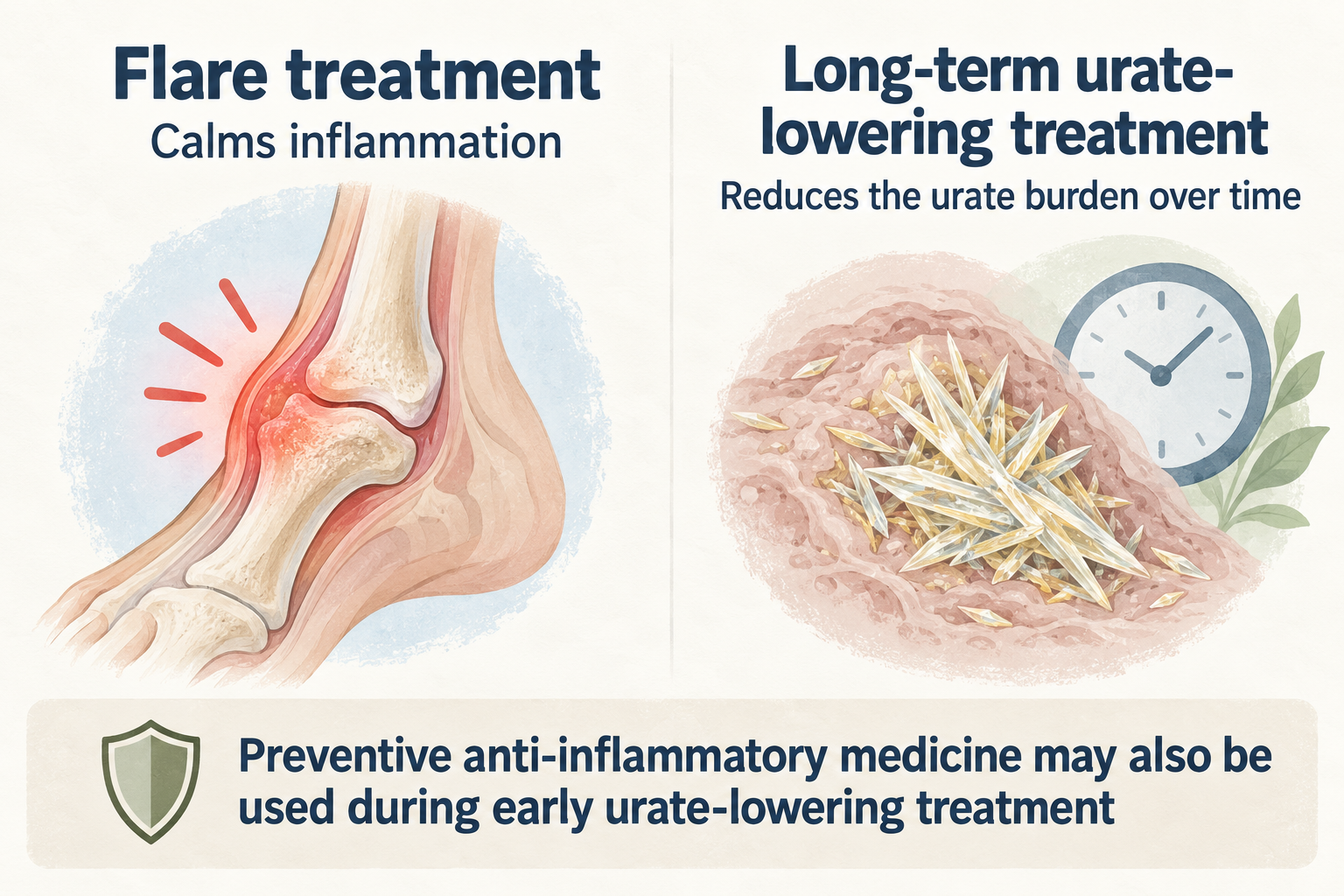
Record the two treatment jobs separately
Write down daily urate-lowering treatment separately from flare treatment. Preventive colchicine and an acute course can have different directions. An ordinary flare is usually not a reason to stop existing allopurinol, but a new rash or suspected hypersensitivity means stopping it and seeking prompt medical advice. Severe reaction symptoms require emergency assessment. S09 S10
Keep the plan usable
Keep an accessible copy with your medicine list. Check refills and travel supply before they become urgent. Review the plan after a kidney-function change, a new interacting medicine, side effects, or a different attack pattern. After a flare, record what happened and how treatment worked. S03
Related pages
- Appointments, treatment access and your care team
- Medicine interactions and safety
- Colchicine
- When joint symptoms need urgent help