Understanding gout
Prepared 2026-10-29 · Read as Markdown
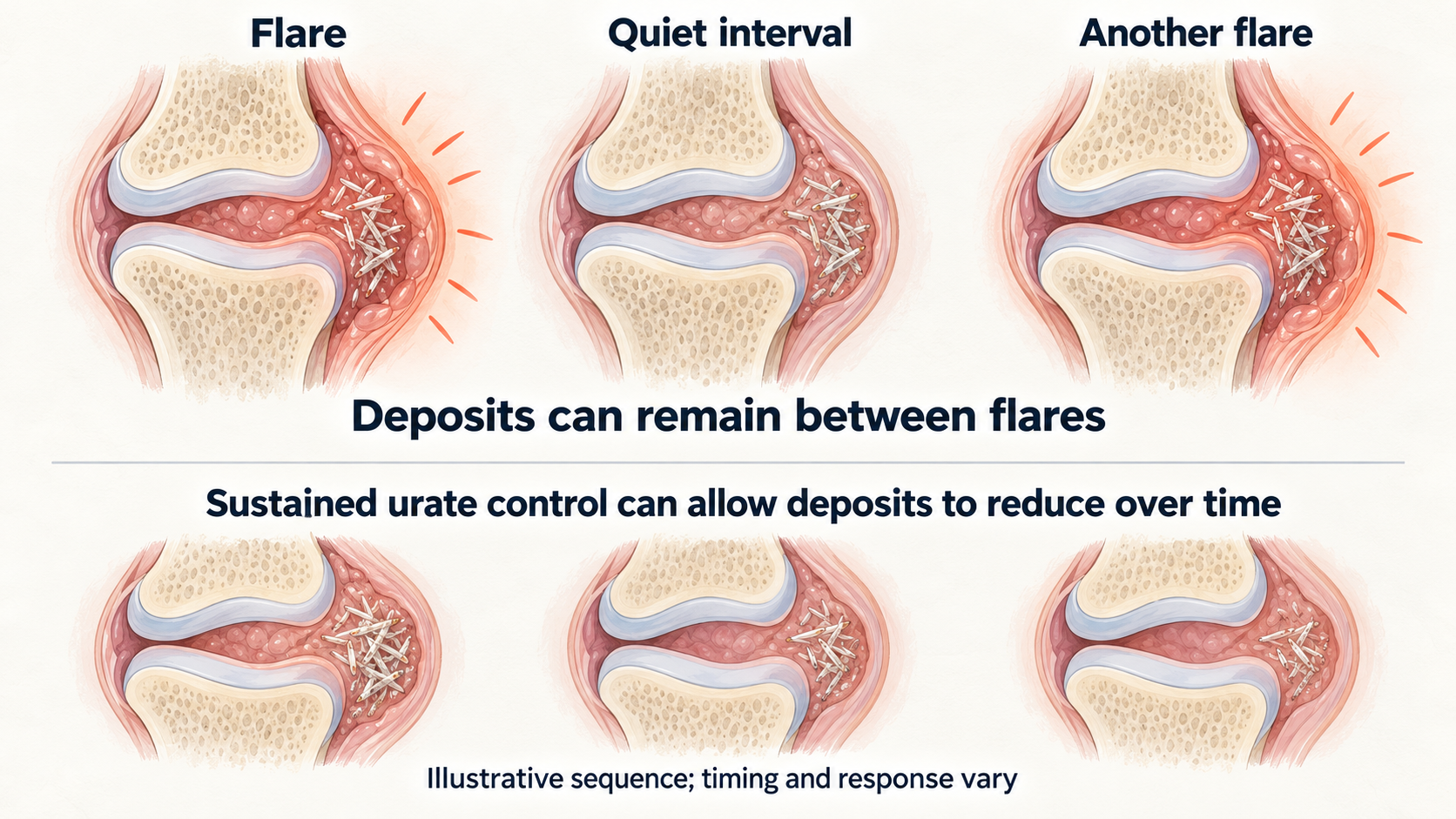
Gout is inflammatory arthritis caused by urate crystals collecting in and around joints. A flare is the painful inflammation those crystals can provoke. The pain may settle while deposits remain, which helps explain why gout care needs to look beyond the next attack. [S06]
In this section
What causes gout—and what can set off a flare?
Read the practical explanation and supporting sources.
Explore this topicUric acid, urate, and purines: what’s the difference?
Read the practical explanation and supporting sources.
Explore this topicHow gout can change over time
Read the practical explanation and supporting sources.
Explore this topicCommon questions—and confusing claims—about gout
Read the practical explanation and supporting sources.
Explore this topic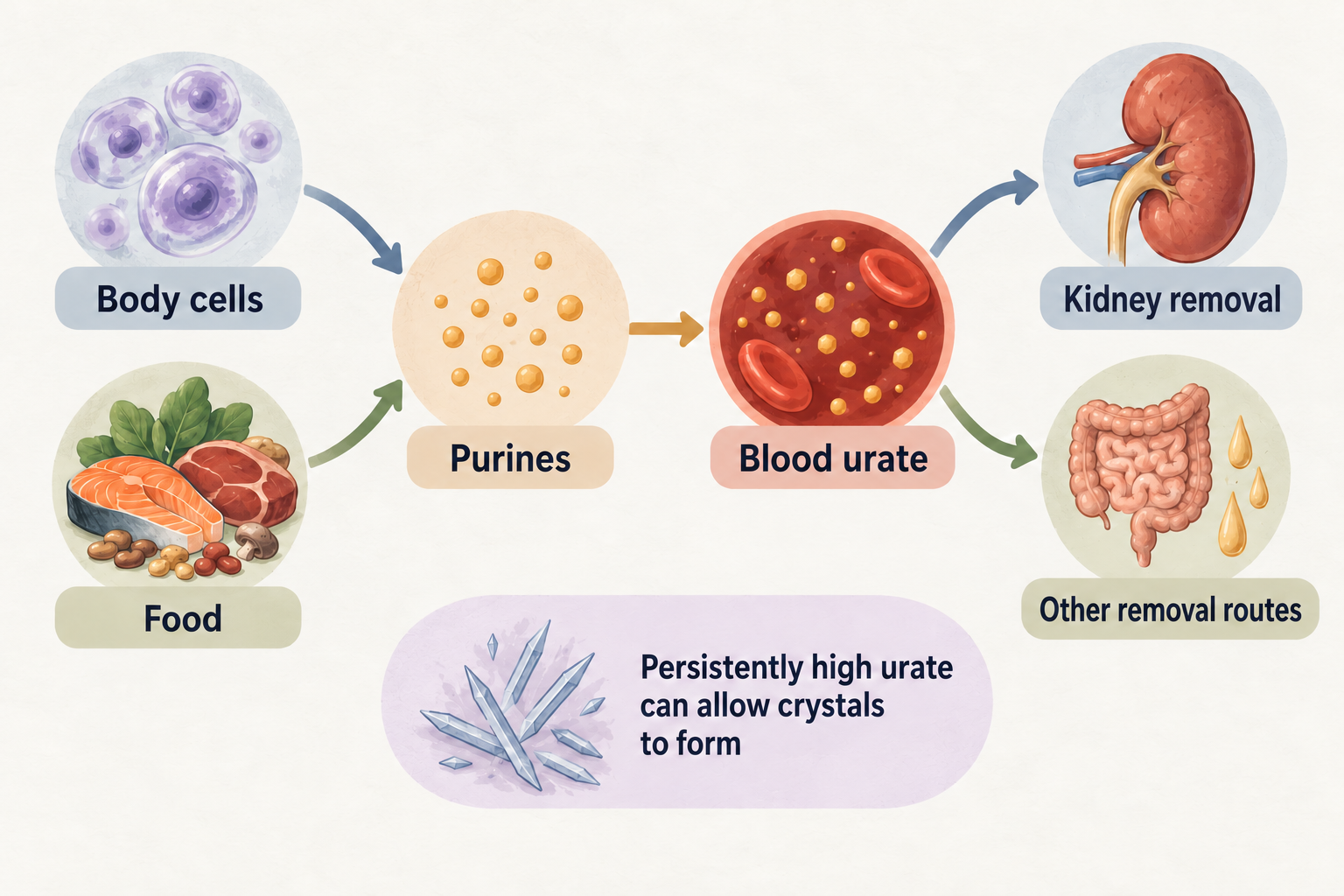
Where the crystals come from
Your body makes urate as it breaks down purines—substances found in your own cells as well as food. The amount in your blood depends on how much you produce and how much you remove. When that balance leaves urate persistently high, crystals are more likely to form. A high blood result alone, though, is not the same as a gout diagnosis. S06
Why it can seem to come and go
A flare can feel like a sudden injury, particularly the first time. Then the symptoms ease, sometimes leaving a long quiet stretch. That interval does not necessarily mean the crystals have gone. The big toe is a familiar site, but ankles, knees, hands, and other joints can be affected too. S03 S06
A useful plan has more than one job
Good care starts with checking the diagnosis and considering other causes, especially infection. It then addresses pain and inflammation, whether long-term urate-lowering treatment is appropriate, and how to monitor that treatment. Kidney health, other conditions, and your existing medicines all belong in that conversation. S02 S03
You need a plan for the days you hurt and the days you feel fine.
Four terms you’ll see
- Urate or uric acid: the substance measured in a blood test.
- Hyperuricemia: a high blood urate level.
- Intercritical gout: the interval between flares.
- Tophus: an organized crystal deposit with a surrounding tissue response; the plural is tophi. S06
None of these terms tells your whole story. Neither does a food diary. Gout involves several influences, including genetics, medicines, and how the body handles urate. It is not evidence of a personal failing. S02
Related pages
- Causes and risk factors
- Uric acid, urate and purines
- Stages and progression
- Common gout misconceptions