What causes gout—and what can set off a flare?
Prepared 2026-10-29 · Read as Markdown
Gout starts with urate crystals, but the reasons urate builds up vary. Your body may produce too much, remove too little, or both. Genetics, kidney function, medicines, and other health conditions can all play a part. You can develop gout without heavy drinking or an unusually rich diet. [S06]
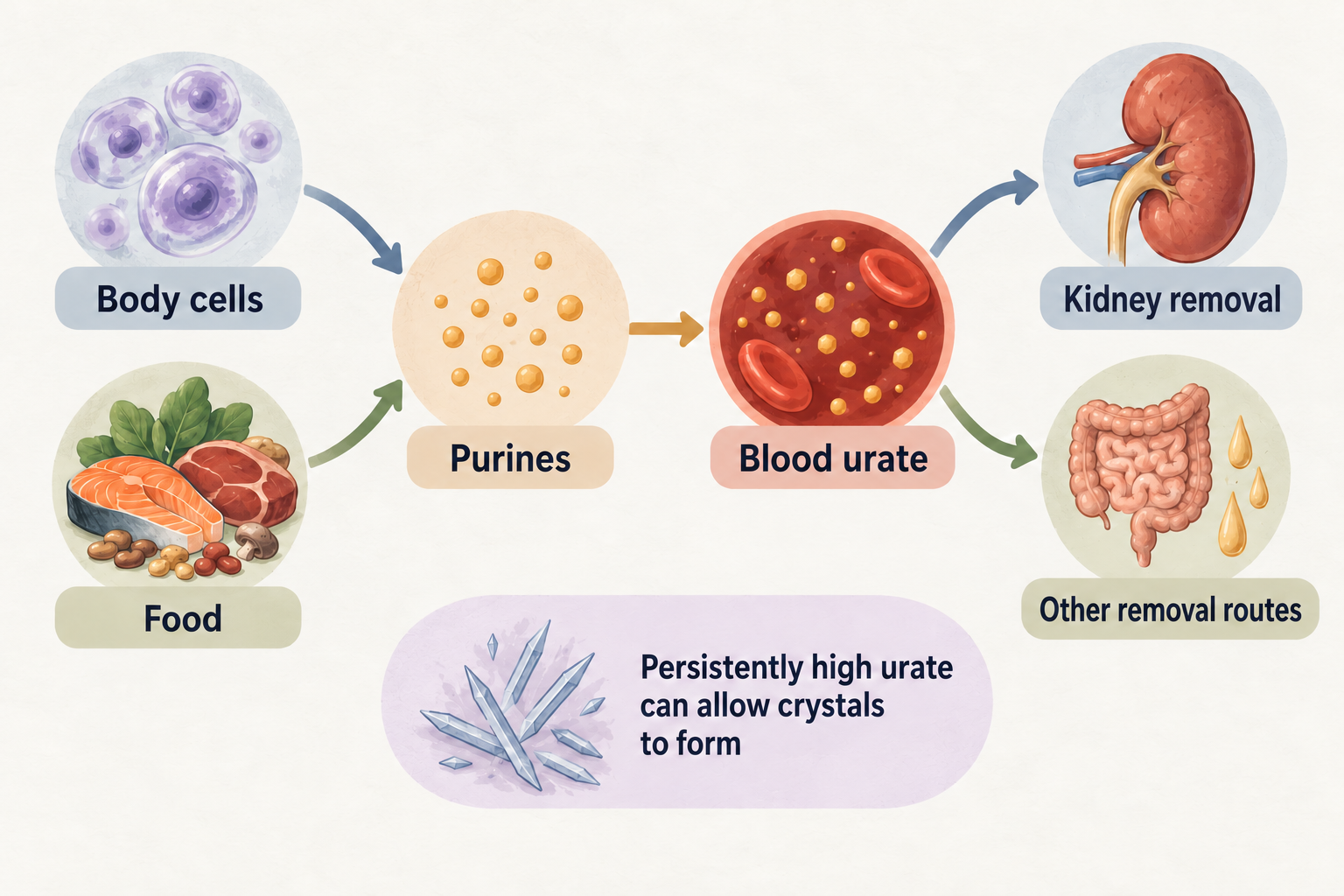
Look at the whole picture
A clinician may ask about gout in your family, kidney disease, blood pressure, diabetes, metabolic health, and conditions that increase cell turnover. Age and sex-related factors matter too: gout is more common in men and becomes more common in women after menopause. Younger adults can also have it. These patterns help build a history; they do not decide who deserves an assessment. S06
Where food and alcohol fit
Alcohol, sugary drinks, and large amounts of animal-source purines are worth discussing. Changes may support treatment, but they do not remove genetic or kidney-related susceptibility. The American College of Rheumatology’s lifestyle recommendations are generally conditional, and a single food change often has a modest effect on blood urate. S02
Check medicines without stopping them yourself
Some diuretics, low-dose aspirin, high-dose niacin, and certain immune-suppressing medicines can affect urate. The reason you take them still matters. ACR conditionally supports switching hydrochlorothiazide or choosing losartan when feasible, but advises against stopping low-dose aspirin prescribed for an appropriate reason. Bring the full list to your prescriber rather than crossing things off yourself. S02 S06
A trigger is not the whole cause
Illness, injury, dehydration, alcohol, a large meal, or changes in urate-lowering treatment may precede a flare. Recording the timing can help a conversation. One meal followed by pain does not prove that meal caused it; the existing crystal deposits and your individual susceptibility matter as well. S02 S08
Related pages
- Uric acid, urate and purines
- Medicine interactions and safety
- Weight, hydration and fasting
- Appointments, treatment access and your care team