NSAIDs for a gout flare
Prepared 2026-10-29 · Read as Markdown
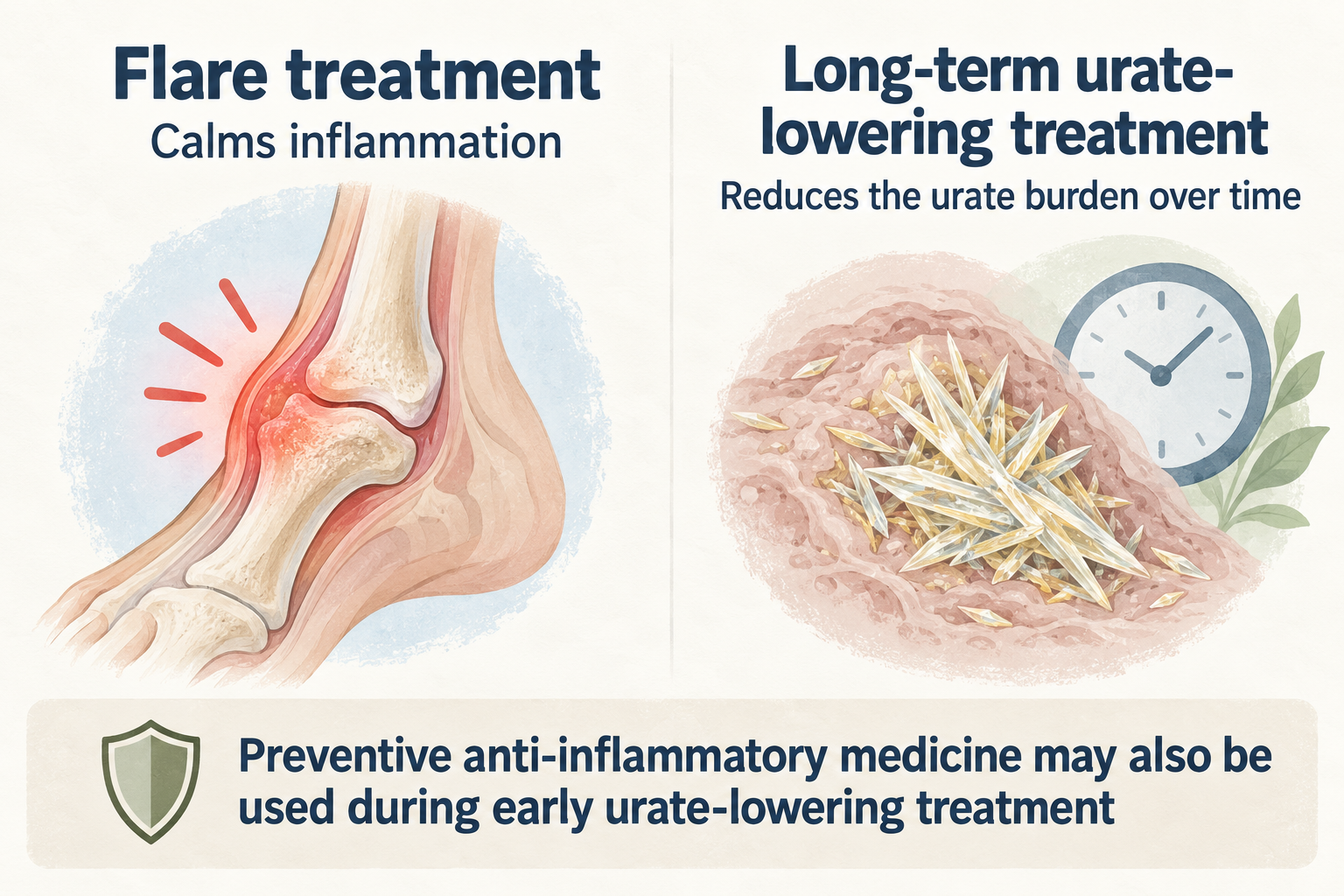
Nonsteroidal anti-inflammatory drugs, or NSAIDs, reduce pain and inflammation during a flare. They are among the recommended first-line options, but no single NSAID is suitable for everyone. They do not directly dissolve urate deposits. [S02] [S03]
An over-the-counter product still needs a safety check
Kidney disease, stomach ulcers or bleeding risk, cardiovascular disease, blood pressure, blood thinners, allergies, and other medicines can affect suitability. Pregnancy, age, and other conditions also matter. If you do not have clear instructions, ask a pharmacist or prescriber before choosing a product. S03
Watch for duplicate ingredients
Brand names can hide the fact that two products are both NSAIDs. Do not combine two NSAIDs or add an over-the-counter one to a prescription NSAID without explicit directions. Mention aspirin, anticoagulants, diuretics, and other pain medicines when your treatment is checked. S03
If an NSAID is unsuitable or not working, a clinician may consider colchicine or a corticosteroid instead. That decision depends on your assessment and medical history. S03
Stomach protection does not remove every risk
NICE advises considering a proton-pump inhibitor with an NSAID for a gout flare. This does not eliminate all bleeding or kidney risks. Worsening illness, suspected bleeding, reduced urine, or another significant adverse effect needs medical assessment. S03
Clarify prevention versus flare treatment
Some people receive a low-dose anti-inflammatory while starting urate-lowering treatment. That does not authorize an additional acute course or another NSAID. Ask the care team to write down the purpose, directions, and point at which you should call if symptoms are not improving. S02 S03
Related pages
- Gout, kidney disease and kidney stones
- Gout, heart health and diabetes
- Preparing a personal flare plan
- Corticosteroids for gout flares