Corticosteroids for a gout flare
Prepared 2026-10-29 · Read as Markdown
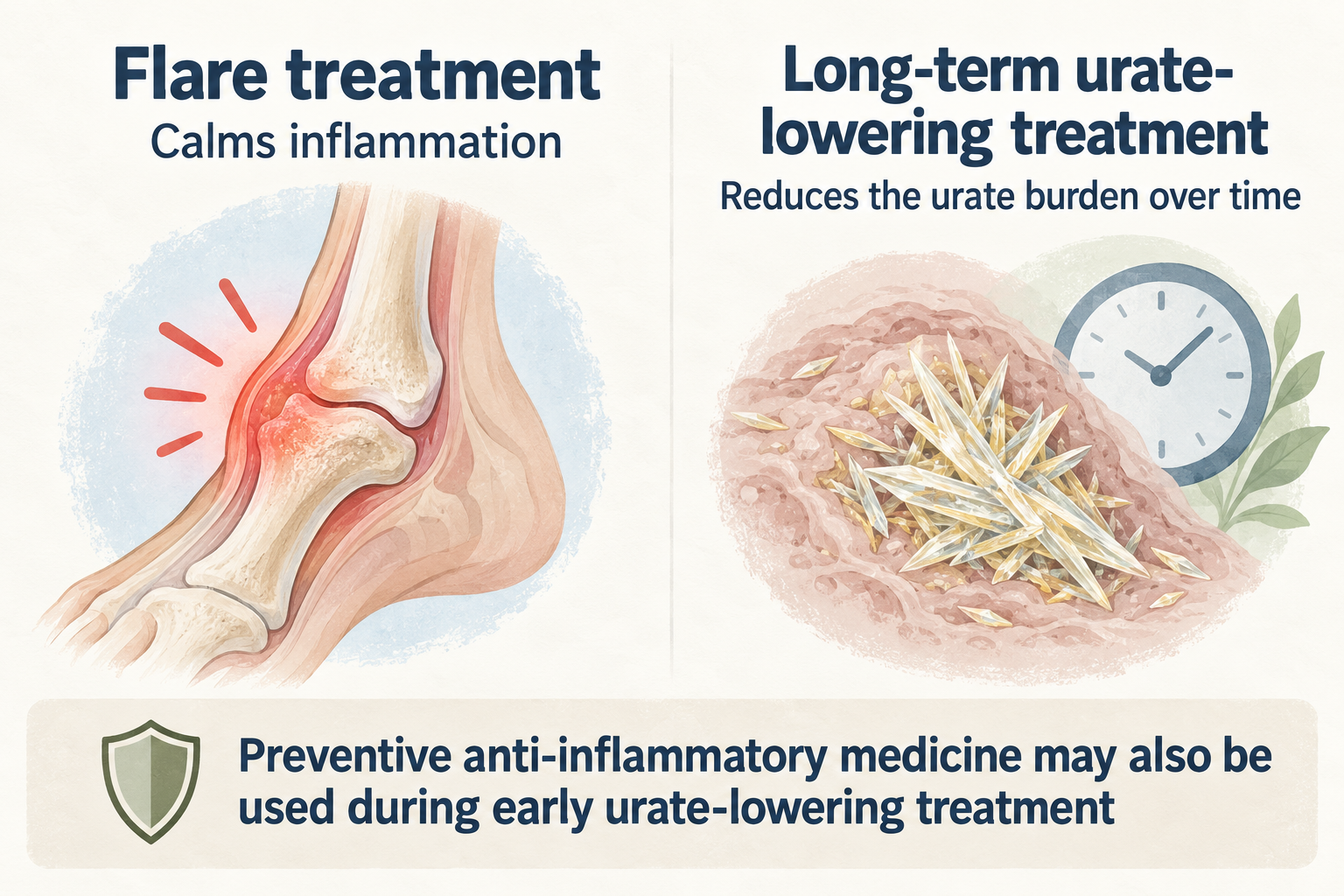
Corticosteroids, also called glucocorticoids or simply steroids, reduce inflammation during a flare. They may be given by mouth or by selected injection routes. The choice depends on the joints involved, other conditions, previous treatment, and your preferences. They do not remove the underlying urate burden. [S02] [S03]
Why the route matters
NICE includes a short oral course among first-line flare options and considers an injection into a joint or muscle when NSAIDs and colchicine are unsuitable or ineffective. Before injecting a joint, the clinician needs to assess the diagnosis and infection risk. Feeling better after a steroid does not prove an episode was gout. S03 S05
Ask for clear course instructions
Diabetes, possible infection, and your broader medical history can affect treatment and monitoring. Ask about expected effects and exactly how to take the prescribed course. Do not use a leftover course for an undiagnosed swollen joint, extend a course yourself, or change a regular steroid regimen without advice. S03
Repeated courses deserve a wider review
If you repeatedly need rescue treatment, ask whether the diagnosis and long-term gout control need another look. Urate-lowering treatment aims to reduce future attacks when appropriate. S02
Canakinumab is a US-labeled specialist option for selected adults when standard medicines are unsuitable or insufficient and repeated steroid courses are inappropriate. It has its own infection precautions and does not replace urate-lowering treatment. S14
Questions to take away answered
Which route am I receiving? What is the stop or taper instruction for this prescription? What should I do if symptoms worsen or return? How does it fit with my preventive medicines? Put those answers in your written flare plan.
Related pages
- Managing a gout flare
- Specialist and advanced gout treatment
- Urate-lowering therapy and prevention
- Preparing a personal flare plan