Gout, kidney disease, and kidney stones
Prepared 2026-10-29 · Read as Markdown
The kidneys help remove urate, so kidney disease can affect gout risk and treatment choices. Kidney stones are a related concern, but having gout does not mean every stone is made of uric acid. Stone type and kidney function need proper assessment. [S06]
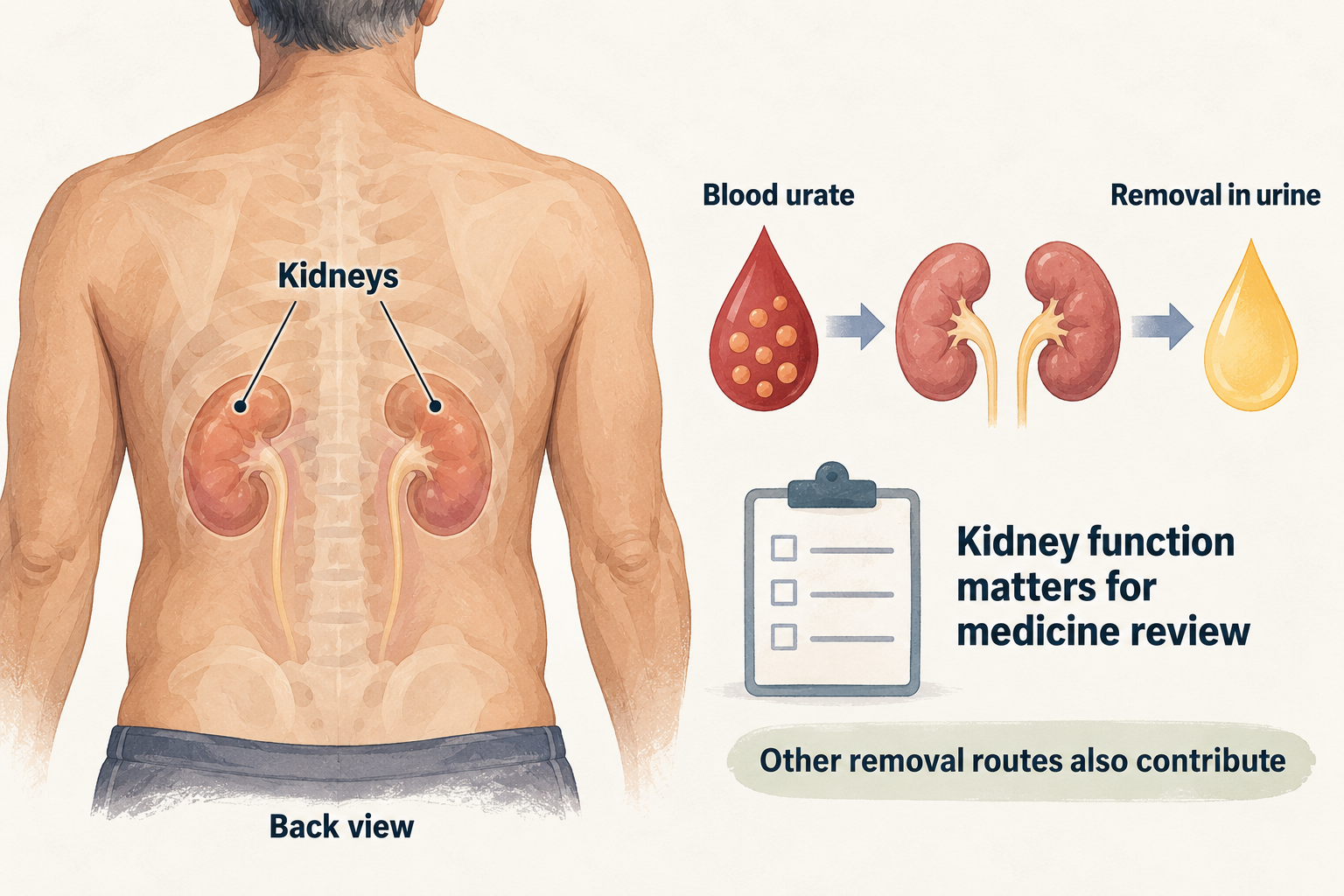
Check the flare plan against kidney function
Kidney disease can limit NSAID use and affect whether colchicine is suitable and when a course may be repeated. Some colchicine interactions combined with kidney or liver impairment can cause life-threatening toxicity. Do not copy another person’s directions. S03 S10
Long-term treatment can still be appropriate
ACR prefers allopurinol initially even in CKD stage 3 or greater, with a low start and monitored dose adjustment. Some people need higher maintenance doses to reach target. In this group, ACR favors a xanthine oxidase inhibitor over probenecid, whose label also notes impaired effectiveness with significant kidney impairment and concerns about uric-acid stones. S02 S12
Follow your own fluid and nutrition advice
Generic instructions to drink several liters, take alkalinizing products, or cut out broad food groups may conflict with kidney care. Ask the treating team to reconcile the advice. Herbs and supplements also need checking, particularly with impaired elimination or multiple medicines. S08 S20
Know when specialist input may help
NICE recommends considering rheumatology referral for CKD stages 3b–5 or organ transplantation. Discuss urate targets, kidney results, stones, blood pressure, and medicine monitoring together. S03
Keep separate treatment claims separate
Evidence that urate lowering treats gout does not establish that treating symptom-free high urate prevents kidney disease progression. That is a different question requiring its own evidence and clinical decision. S02 S03
Related pages
- Medicine interactions and safety
- Allopurinol
- Probenecid and uricosuric treatment
- Weight, hydration and fasting
Sources
- S02: 2020 American College of Rheumatology Guideline for the Management of Gout
- S03: NICE NG219: Gout, diagnosis and management, recommendations
- S06: NIAMS: Gout overview, symptoms, causes and risk factors
- S08: NHS: Gout
- S10: DailyMed: Colchicine tablets prescribing information
- S12: DailyMed: Probenecid tablets prescribing information
- S20: NCCIH: Using dietary supplements wisely