Allopurinol: what it does and what to watch for
Prepared 2026-10-29 · Read as Markdown
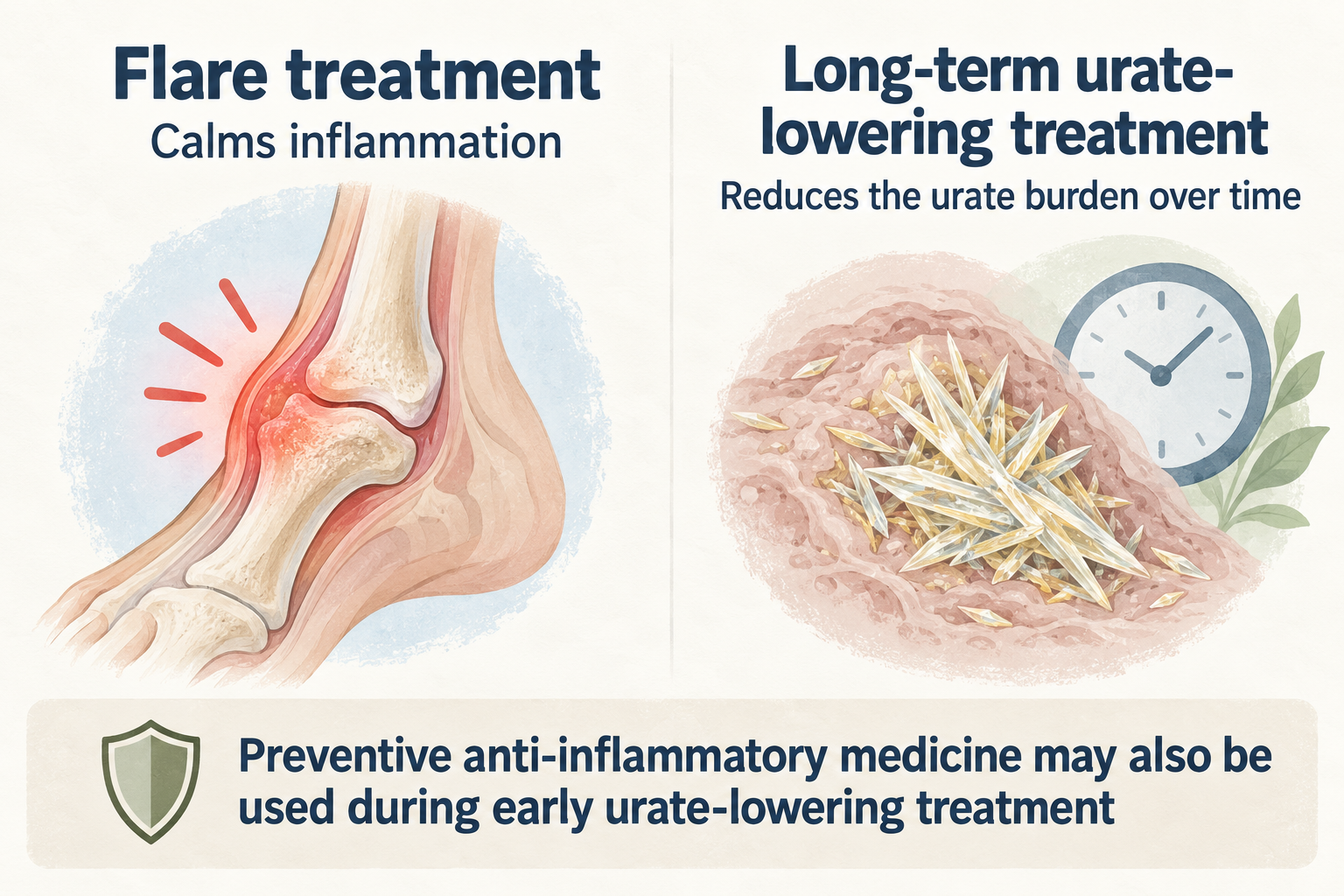
Allopurinol lowers urate production. It is long-term gout treatment, rather than a medicine for immediate flare relief. ACR prefers it as the initial urate-lowering medicine, including for people with chronic kidney disease, with clinical monitoring and dose adjustment. [S02] [S09]
Starting low is the beginning of a process
The US label calls for baseline urate, blood count, chemistry, liver, and kidney assessment. Guidelines recommend a low starting dose—lower with kidney disease—then adjustment toward the agreed urate target. Some people need more than 300 mg daily under supervision, including selected people with kidney disease. Do not increase your own dose; ask whether your results show that the plan is reaching its goal. S02 S09
Take a new rash seriously
Stop allopurinol and seek prompt medical advice for a new rash or other suspected hypersensitivity symptoms. Blistering, peeling skin, mouth or eye involvement, swelling, breathing difficulty, or severe illness needs emergency assessment. S09
ACR conditionally recommends HLA-B*58:01 testing before starting in specified higher-prevalence ancestry groups and African American patients, rather than everyone. Ask whether testing is relevant to you. A test does not eliminate all reaction risk. S02 S09
Have interactions checked
Azathioprine and mercaptopurine are particularly important interactions requiring specialist handling. Other prescriptions, including some antibiotics, can also matter. Give your pharmacist or prescriber a complete list, including over-the-counter products and supplements. S09
A flare and a drug reaction need different responses
Flares can occur early as urate changes, and preventive anti-inflammatory treatment is often prescribed. An ordinary flare is usually treated while allopurinol continues. That advice does not apply to a suspected allergy or another serious adverse effect. S02 S09
Follow-up should cover urate results, kidney and liver safety, symptoms, side effects, refills, and any difficulty following the plan. Those practical problems deserve discussion too. S02 S09
Related pages
- When joint symptoms need urgent help
- Medicine interactions and safety
- Urate-lowering therapy and prevention
- Targets, monitoring and follow-up