Urate targets, blood tests, and follow-up
Prepared 2026-10-29 · Read as Markdown
Pain matters, but it does not tell the whole treatment story. Follow-up should consider blood urate, flares, tophi, movement, side effects, kidney health, and whether you can obtain and take the medicine. A quiet stretch does not prove urate is controlled, and early flares do not automatically mean treatment is failing. [S02] [S03]
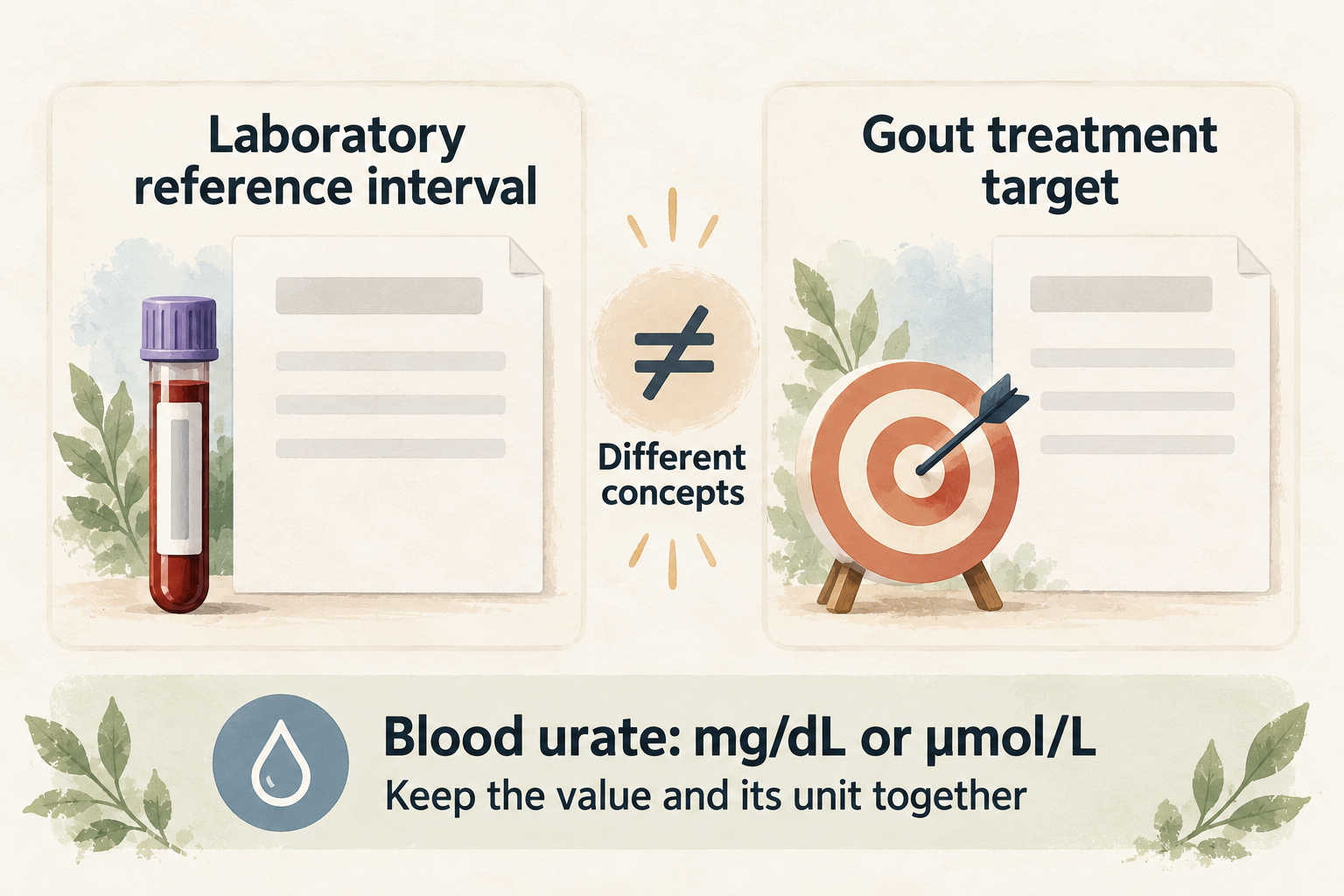
Know your target—and its unit
The usual gout treatment target is below 6 mg/dL, approximately 360 µmol/L in guideline convention. NICE considers below 5 mg/dL (300 µmol/L) for tophi, chronic gouty arthritis, or frequent flares continuing despite the usual target. A laboratory’s reference interval and your gout treatment target are different things. S02 S03
Expect checks while the dose changes
NICE uses monthly urate results to guide dose increases until target is reached, then considers annual urate monitoring during continuing treatment. ACR supports repeat urate-guided adjustment with a practical schedule tailored to the regimen. Kidney and liver tests and blood counts depend on your medicine and circumstances; urate is not the whole safety check. S02 S03 S09
Ask about early-flare prevention
ACR recommends anti-inflammatory prevention for at least three to six months when ULT begins, with reassessment and extension if attacks continue. NICE discusses prevention while target urate is being reached. Interactions, tolerance, and kidney function influence the choice. S02 S03
Bring a useful record
Keep the date, urate value, unit, dose at the time, and whether a flare was occurring. Note attacks and side effects separately. Raise missed doses, confusing directions, or refill problems openly. A simpler or more accessible plan may be more useful than another instruction you cannot realistically follow. S03
Related pages
- Uric acid, urate and purines
- Urate-lowering therapy and prevention
- Flare and urate record
- Appointments, treatment access and your care team