Cherries and tart cherry juice: what do we know?
Prepared 2026-10-29 · Read as Markdown
Cherries get plenty of attention in gout advice. The evidence is less settled than the enthusiasm suggests. Observational research has suggested fewer attacks among cherry users, but an association cannot show that a product caused the difference or lowered urate. Fruit, juice, concentrate, and capsules are different interventions too. [S15] [S16]
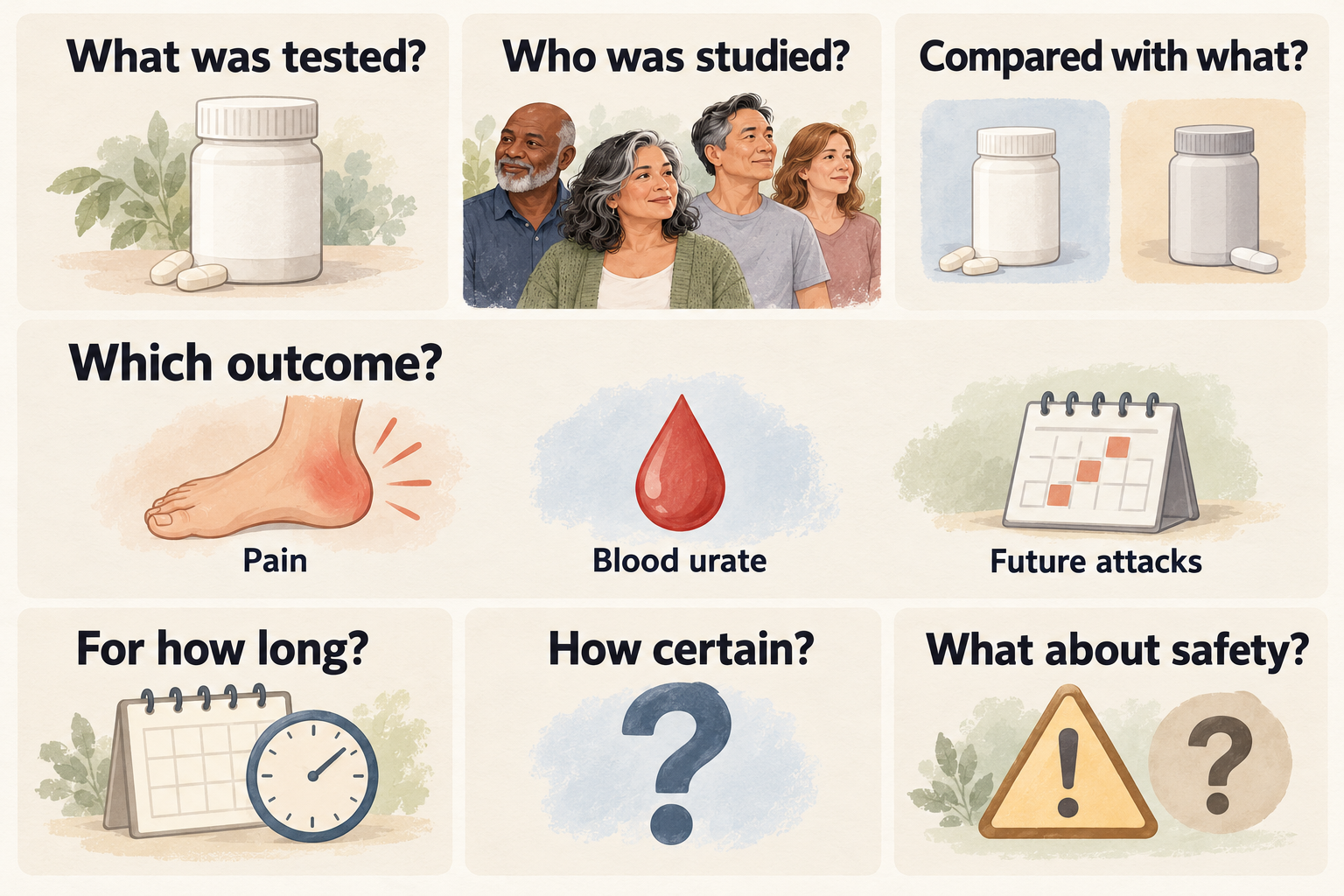
What a direct gout trial found
A randomized dose-ranging study included 50 people with gout and elevated urate, half taking allopurinol. Over 28 days, different tart cherry concentrate doses did not significantly reduce blood urate or urinary urate excretion. The small sample and short duration leave longer-term prevention questions unresolved. This proves neither a cure nor that every possible cherry regimen has no effect. S16
Why the guidelines stop short
NICE reviewed small, varied trials and found insufficient robust evidence for a specific dietary or cherry strategy. ACR did not make a specific cherry recommendation because the evidence was inadequate. Small studies, different comparators, and short follow-up limit certainty. S02 S15
Consider the actual product
Cherries can be food within an appropriate overall diet, but these sources do not establish a preventive dose. Concentrated juice can add substantial sugar; the trial reported a possibly related hyperglycemia event. Portions, diabetes, other nutrition needs, and cost matter. S16
Keep proven care in place
Do not use cherry products instead of assessment for a hot, swollen joint, prescribed flare treatment, or indicated ULT. If you choose a product, record its formulation and discuss it with your care team rather than assuming a natural label means no safety questions. S03 S20
Related pages
- Sugar, fructose and drink choices
- Natural remedies, complementary approaches and homeopathy
- Vitamin C and other dietary supplements
- Urate-lowering therapy and prevention
Sources
- S02: 2020 American College of Rheumatology Guideline for the Management of Gout
- S03: NICE NG219: Gout, diagnosis and management, recommendations
- S15: NICE Evidence Review I: Diet and lifestyle modifications for gout
- S16: Stamp et al.: Lack of effect of tart cherry concentrate dose on serum urate in people with gout
- S20: NCCIH: Using dietary supplements wisely