Vitamin C and supplements marketed for gout
Prepared 2026-10-29 · Read as Markdown
A supplement can change a blood-test result without proving that it prevents gout attacks. That distinction matters when reading claims about vitamin C and other products. ACR conditionally recommends against adding vitamin C supplementation specifically for gout. This does not mean avoiding vitamin C foods or leaving a separate deficiency untreated. [S02] [S15]
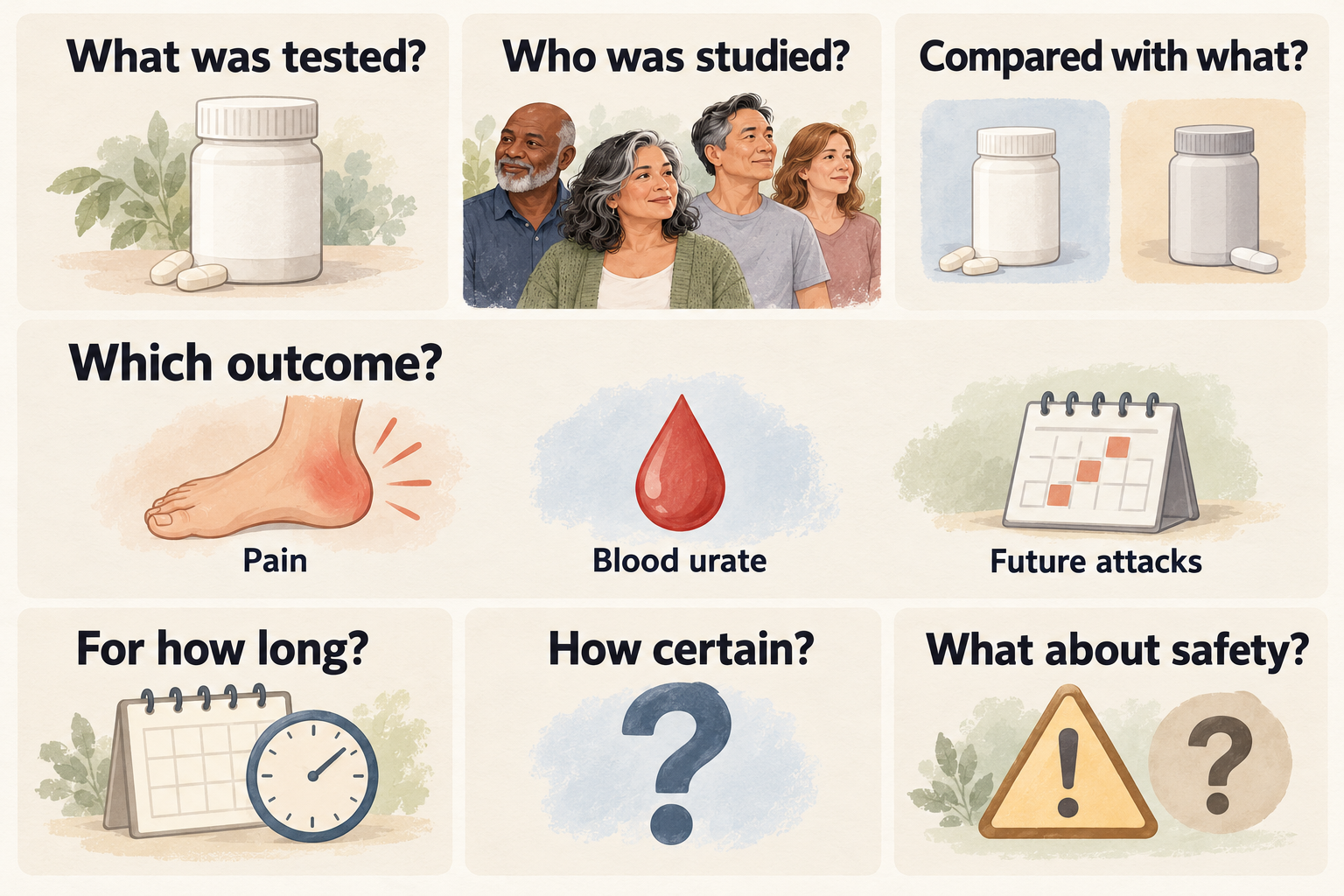
What about other ingredients?
Products may include omega-3 oils, probiotics, folate, celery extracts, turmeric, or proprietary blends. Studies differ in participants, preparations, and outcomes, so broad category claims are unreliable. The research foundation for this site did not establish a universal gout-prevention supplement regimen. A familiar ingredient name cannot establish a particular product’s safety. S20 S21
A “health” product can still contain purines
The USDA workbook includes brewer’s yeast, algae, and nucleotide-related supplements in separate dose-based tables. They are not automatically low in purines because of how they are marketed. Supplement measurements per serving cannot be mixed with food measurements per 100 grams. S26 S27 S28
Quality testing and effectiveness answer different questions
Supplements may interact with prescriptions, have variable ingredients, or contain contaminants. A short trial with few reported adverse events does not establish long-term safety, particularly with kidney disease or several medicines. Third-party quality testing does not prove gout benefit. S20
Take the label to the appointment
Bring the exact product, ingredients, and dose to a pharmacist or clinician. Ask what outcome the evidence addresses and whether that outcome matters for your gout plan. Treating a deficiency, changing urate slightly, and preventing attacks are separate claims. No personalized supplement dose is recommended here.
Related pages
- Herbs, vinegar and traditional remedies
- Cherries and tart cherry products
- Medicine interactions and safety
- Purine content of foods: complete measured reference
Sources
- S02: 2020 American College of Rheumatology Guideline for the Management of Gout
- S15: NICE Evidence Review I: Diet and lifestyle modifications for gout
- S20: NCCIH: Using dietary supplements wisely
- S21: Yang et al.: Natural product dietary supplements in gout, systematic review and meta-analysis
- S26: USDA ARS: Purine content of foods dataset landing page
- S27: USDA/ODS-NIH purine database documentation Release 3.0
- S28: USDA/ODS-NIH purine database and data sources Release 3.0