Could this be gout? Prepare for an assessment
Prepared 2026-10-29 · Read as Markdown
A sudden painful, swollen joint can fit gout, but it can also have other causes, including infection. This guide helps you prepare a useful history. It cannot tell you whether you have gout or that infection has been ruled out. Use the guide below to organize your symptoms and questions for a care conversation. [S03] [S05]
Organize symptoms for a care conversation
This guide cannot diagnose gout, exclude infection, or choose medicines. Answers stay on this page and are not saved or sent.
Read urgent-help guidance without completing this form
Sources: NICE NG219 and official medicine safety references. This questionnaire is not a clinically validated decision rule. It cannot diagnose gout or rule out infection.
First, decide whether you need urgent help
Seek urgent assessment for a swollen joint with fever, chills, feeling unwell, or worsening symptoms. Severe illness or rapidly worsening symptoms needs emergency care. Do not wait to complete a form. Infection can also occur without fever, and a previous gout diagnosis does not exclude it. S03 S08
A suspected serious medicine reaction needs separate action. A new rash while taking allopurinol requires stopping it and prompt medical advice; severe reaction symptoms require emergency care. S09
Write down what has happened
- When did symptoms start, and how quickly did they intensify?
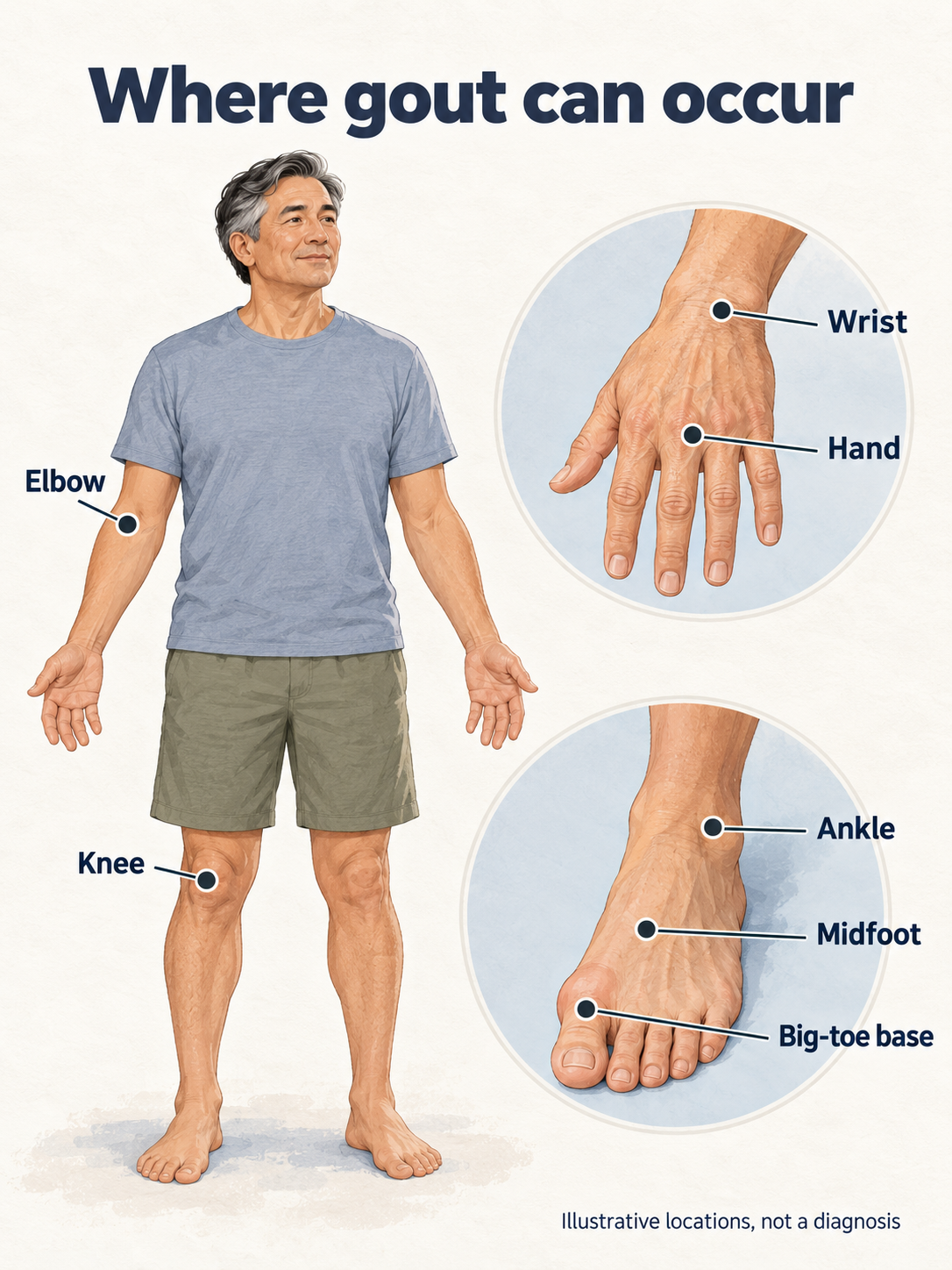
- Which joint or joints are involved?
- Is there swelling, warmth, or a change in appearance?
- Can you walk or use the limb?
- Have there been fever, illness, wounds, injuries, injections, or surgery?
- Have you had a confirmed diagnosis or similar episodes before?
- What conditions, medicines, supplements, and recent prescriptions should the clinician know about? S03
Bring previous urate or other test reports if available. “Not sure” is a valid answer; do not fill gaps with guesses.
What happens next
A clinician uses the history, examination, and sometimes tests to assess the cause. Diet, body weight, age, sex, or alcohol use cannot alone confirm or exclude gout. Joint location and a blood result cannot supply that certainty either. S03 S05
Related pages
- When joint symptoms need urgent help
- A first possible gout attack
- How gout is diagnosed
- What you can do: practical next steps